WORLD UNIVERSITY
Constitution, Founding Charter, Institutional Profile and Governance Framework
Founded by
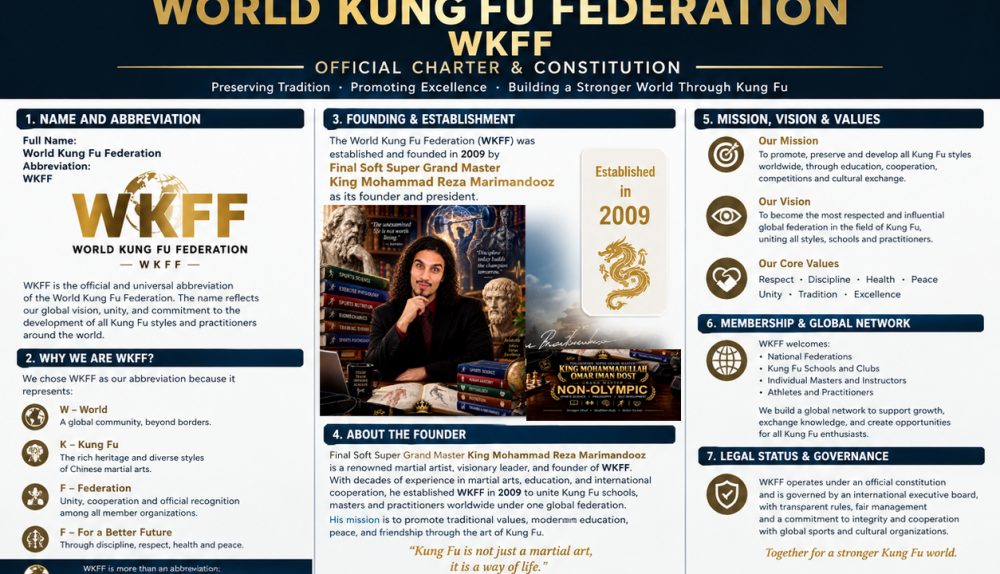
Philosopher Super Grandmaster King Mohammadullah Omar Iman Dost
PREAMBLE
We, the founders, scholars, educators, researchers, intellectuals, professionals, and members of the international academic community associated with World University, recognizing the transformative power of knowledge, education, philosophy, science, research, culture, ethics, and human cooperation, hereby establish this Charter as the foundational framework of the institution.
World University is conceived as an international academic and intellectual institution dedicated to the advancement of knowledge and the development of educated, ethical, creative, responsible, and globally minded human beings.
The institution seeks to bring together scholars and learners from diverse countries, cultures, academic disciplines, and intellectual traditions and to create a platform through which education and research can contribute to peace, human dignity, scientific advancement, cultural understanding, sustainable development, and the betterment of humanity.
The institution recognizes Philosopher Super Grandmaster King Mohammadullah Omar Iman Dost as its Founder, according to the founding designation established for this Charter.
ARTICLE I
NAME AND IDENTITY
Section 1. Official Name
The official name of the institution shall be:
WORLD UNIVERSITY (WU)
The institution may use appropriate translations, abbreviations, insignia, seals, academic titles, and institutional designations as authorized by its governing authority and applicable law.
Section 2. Institutional Character
World University shall seek to operate as an international academic, educational, philosophical, scientific, cultural, and research institution.
Its precise legal status shall be determined by the jurisdiction in which it is incorporated or recognized.
Nothing in this Charter shall be interpreted as automatically conferring governmental recognition, university accreditation, degree-awarding authority, or legal university status in any country where such recognition requires separate governmental or regulatory authorization.
Section 3. Institutional Independence
World University shall strive to maintain academic independence and intellectual integrity.
The institution shall encourage free inquiry, evidence-based scholarship, critical thinking, interdisciplinary research, constructive debate, and respectful exchange of ideas.
ARTICLE II
FOUNDING PRINCIPLE
World University is founded upon the principle that education is a universal instrument for intellectual development, ethical growth, scientific discovery, cultural understanding, and peaceful cooperation.
The institution shall seek to connect:
- Philosophy and science;
- Tradition and innovation;
- Humanity and technology;
- Education and practical service;
- Local knowledge and global scholarship;
- Individual development and social responsibility;
- Academic excellence and ethical conduct.
ARTICLE III
FOUNDER
Section 1. Founder
The founding designation of World University recognizes:
Philosopher Super Grandmaster King Mohammadullah Omar Iman Dost
as the Founder and Founding Visionary of World University.
Section 2. Founder’s Vision
According to the founding concept of the institution, the Founder is associated with the vision of creating an international intellectual platform capable of bringing together education, philosophy, scholarship, research, leadership, culture, and human development.
Section 3. Founder’s Legacy
The institution may establish a:
Founder’s Office
and, subject to applicable law, a:
Founder’s Chair for Philosophy, Leadership and Global Education
to preserve and develop the intellectual principles upon which World University was established.
ARTICLE IV
MISSION
The mission of World University shall be:
- To advance higher education and lifelong learning.
- To promote scientific and philosophical inquiry.
- To support interdisciplinary research.
- To encourage international academic cooperation.
- To develop ethical and responsible leaders.
- To promote cultural dialogue and mutual understanding.
- To advance innovation, technology, and entrepreneurship.
- To encourage scholarship addressing global challenges.
- To make knowledge accessible across geographic and cultural boundaries.
- To contribute to peace, sustainability, human dignity, and social progress.
ARTICLE V
VISION
World University envisions a global academic community in which knowledge transcends borders and education becomes a bridge among civilizations.
Its long-term vision is to develop an internationally connected network of scholars, researchers, educators, students, professionals, intellectuals, and academic institutions.
The institution seeks to become a recognized platform for:
Knowledge — Wisdom — Science — Philosophy — Innovation — Leadership — Humanity.
ARTICLE VI
CORE VALUES
World University shall be guided by:
- Academic Excellence
- Intellectual Freedom
- Integrity
- Human Dignity
- Universal Education
- Peace
- Scientific Inquiry
- Cultural Respect
- Sustainability
- Service to Humanity
ARTICLE VII
ACADEMIC OBJECTIVES
World University may establish programs and research activities in:
Humanities
Philosophy, history, literature, languages, comparative civilization, cultural studies, ethics, arts, and humanities.
Social Sciences
Political science, international relations, sociology, psychology, economics, anthropology, law, public administration, and development studies.
Natural Sciences
Mathematics, physics, chemistry, biology, earth sciences, environmental sciences, and astronomy.
Engineering and Technology
Computer science, artificial intelligence, information technology, engineering, robotics, cybersecurity, data science, and biotechnology.
Health and Life Sciences
Public health, biomedical sciences, health sciences, and other legally regulated disciplines.
Business and Leadership
Business administration, entrepreneurship, finance, management, leadership, and organizational studies.
Global and Interdisciplinary Studies
Peace studies, global governance, sustainable development, human rights, international development, future studies, civilization studies, and science, technology and society.
ARTICLE VIII
ACADEMIC STRUCTURE
World University may establish:
- Schools;
- Faculties;
- Colleges;
- Departments;
- Institutes;
- Research Centers;
- Laboratories;
- Academies;
- Graduate Schools;
- Professional Schools;
- Continuing Education Centers;
- Digital Learning Centers;
- International Studies Centers;
- Libraries and Archives;
- Think Tanks;
- Academic Presses.
ARTICLE IX
RESEARCH
World University shall encourage research that advances knowledge and addresses significant human and global challenges.
Research priorities may include:
- Artificial intelligence and emerging technology;
- Climate and environmental sustainability;
- Peace and conflict resolution;
- Global health;
- Education;
- Poverty and development;
- Philosophy and ethics;
- Human rights;
- Governance;
- Economics;
- Space and astronomical sciences;
- Biotechnology;
- Digital transformation;
- Future studies;
- Cross-cultural understanding.
ARTICLE X
INTERNATIONAL COOPERATION
World University may establish academic relationships with universities, colleges, research institutes, scientific academies, libraries, museums, think tanks, governmental and public institutions, international organizations, NGOs, professional associations, and private research organizations.
Forms of cooperation may include:
- Joint research;
- Faculty exchange;
- Student exchange;
- Academic conferences;
- Joint publications;
- Research grants;
- Visiting professorships;
- International fellowships;
- Public lectures;
- Online education;
- Cultural exchange.
ARTICLE XI
GOVERNANCE
The governance structure of World University may include:
Founder
The Founder shall represent the historical and founding vision of the institution.
Board of Trustees
The Board shall provide strategic oversight, financial governance, institutional stewardship, and long-term protection of the University’s mission.
Chancellor
The Chancellor shall serve as a senior institutional and/or ceremonial leader.
President / Rector
The President or Rector shall serve as the chief executive and academic leader.
Provost
The Provost shall oversee academic affairs, faculties, schools, and educational programs.
Academic Senate
The Senate shall oversee academic standards, curricula, scholarly policy, academic appointments, and academic integrity.
Registrar
The Registrar shall administer academic records, registration, and official academic documentation.
Deans and Department Chairs
Deans and Department Chairs shall administer academic units under the authority of the University’s governance framework.
ARTICLE XII
BOARD OF TRUSTEES
The Board of Trustees shall be responsible for:
- Institutional strategy;
- Financial stewardship;
- Risk management;
- Legal compliance;
- Governance;
- Institutional sustainability;
- Appointment or confirmation of senior officers;
- Protection of institutional assets;
- Oversight of major partnerships.
ARTICLE XIII
ACADEMIC SENATE
The Academic Senate shall safeguard academic quality and shall have responsibility for:
- Academic regulations;
- Curriculum;
- Academic standards;
- Academic awards;
- Research standards;
- Faculty qualifications;
- Academic integrity;
- Academic freedom;
- Academic policies.
ARTICLE XIV
ACADEMIC RANKS
Subject to applicable law and institutional regulations, academic ranks may include:
- Distinguished Professor;
- Professor;
- Associate Professor;
- Assistant Professor;
- Senior Lecturer;
- Lecturer;
- Research Professor;
- Research Fellow;
- Postdoctoral Fellow;
- Visiting Professor;
- Visiting Scholar;
- Emeritus Professor.
Honorary academic titles shall be awarded only according to formally established criteria.
ARTICLE XV
STUDENTS
Students shall have the right to:
- Receive education according to their approved program;
- Access appropriate academic resources;
- Receive fair academic assessment;
- Participate in academic and cultural activities;
- Express scholarly opinions respectfully;
- Receive protection from discrimination and harassment;
- Appeal academic decisions through established procedures.
Students shall maintain academic integrity, respect others, comply with University regulations, and conduct themselves responsibly.
ARTICLE XVI
DEGREES AND ACADEMIC AWARDS
Where legally authorized, World University may offer:
Undergraduate Qualifications
- Certificates;
- Diplomas;
- Bachelor’s Degrees.
Graduate Qualifications
- Master’s Degrees;
- Professional Degrees;
- Doctoral Degrees.
Research Qualifications
- Doctor of Philosophy (PhD);
- Professional Doctorates;
- Research Fellowships.
Honorary Recognition
- Honorary Doctorates;
- Distinguished Scholar Awards;
- Founder’s Awards;
- International Leadership Awards;
- Humanitarian Awards;
- Lifetime Achievement Awards.
All degrees and academic qualifications shall comply with the applicable laws and accreditation requirements of the relevant jurisdiction.
ARTICLE XVII
ACADEMIC INTEGRITY
World University shall maintain strict standards against:
- Plagiarism;
- Fabrication;
- Falsification;
- Examination fraud;
- Unauthorized academic assistance;
- Misrepresentation of qualifications;
- Improper attribution;
- Manipulation of research results.
ARTICLE XVIII
ETHICS AND PROFESSIONAL CONDUCT
All members of World University shall be expected to demonstrate:
- Honesty;
- Professional responsibility;
- Respect;
- Intellectual humility;
- Accountability;
- Non-discrimination;
- Responsible use of knowledge;
- Respect for applicable law.
An independent Ethics Committee may be established.
ARTICLE XIX
EQUALITY AND NON-DISCRIMINATION
World University shall seek to maintain an inclusive academic environment and shall promote equal opportunity in education, employment, research, and institutional participation in accordance with applicable law.
ARTICLE XX
LIBRARY, KNOWLEDGE AND PUBLICATION
World University may establish:
The World University Library and Knowledge Network
and may publish academic journals, books, monographs, research reports, encyclopedias, conference proceedings, and digital educational resources.
ARTICLE XXI
GLOBAL ACADEMIC NETWORK
World University may establish a worldwide network of legally recognized affiliated or collaborating institutions.
Categories may include:
- Strategic Partner;
- Academic Partner;
- Research Partner;
- Affiliated Institution;
- Member Institution;
- Associate Institution;
- Recognized Center;
- International Representative Office.
Affiliation shall not by itself imply governmental recognition or accreditation.
ARTICLE XXII
DIGITAL UNIVERSITY
World University may establish a Digital University providing:
- Online courses;
- Virtual classrooms;
- Digital libraries;
- Online seminars;
- Research databases;
- Academic conferences;
- Open educational resources;
- Continuing professional education.
ARTICLE XXIII
GLOBAL SCHOLARSHIP PROGRAM
World University may establish international scholarships for outstanding students and researchers, particularly in areas of scientific innovation, education, philosophy, peace, humanitarian service, and sustainable development.
ARTICLE XXIV
FOUNDER’S COUNCIL
A Founder’s Council may be established to preserve and develop the founding philosophy and long-term intellectual vision of World University.
The Council may advise on:
- Institutional philosophy;
- Long-term development;
- International relations;
- Cultural programs;
- Philosophical studies;
- Global education;
- Founder-related archives and historical documentation.
ARTICLE XXV
FINANCIAL PRINCIPLES
World University shall maintain responsible and transparent financial management.
Lawful sources of funding may include:
- Tuition and educational fees;
- Grants;
- Donations;
- Endowments;
- Research funding;
- Philanthropic contributions;
- Academic services;
- Conferences;
- Publishing;
- Legally permissible partnerships.
ARTICLE XXVI
TRANSPARENCY
World University shall seek transparency concerning:
- Governance;
- Academic programs;
- Institutional affiliations;
- Academic qualifications;
- Accreditation status;
- Financial management where legally required;
- Institutional policies;
- Academic awards.
The University shall clearly distinguish between institutional designations, honorary titles, earned academic qualifications, and independently verified governmental or academic recognition.
ARTICLE XXVII
ACCREDITATION AND LEGAL RECOGNITION
World University shall comply with all applicable higher-education laws and regulations in each jurisdiction where it operates.
Where governmental authorization or accreditation is required, the University shall obtain the appropriate authorization before representing itself as an accredited or legally recognized degree-awarding institution.
ARTICLE XXVIII
CONFERENCES AND INTELLECTUAL FORUMS
World University may organize international:
- Academic conferences;
- Philosophical congresses;
- Scientific forums;
- Leadership summits;
- Cultural forums;
- Youth conferences;
- Peace forums;
- Innovation summits.
ARTICLE XXIX
CENTERS OF EXCELLENCE
World University may establish Centers of Excellence in areas including:
- Global Philosophy;
- Science and Innovation;
- Artificial Intelligence and Future Technology;
- Peace and Global Dialogue;
- Sustainable Development;
- International Relations;
- Human Civilization Studies;
- Leadership and Governance;
- Education and Lifelong Learning;
- Ethics and Human Values.
ARTICLE XXX
FOUNDER’S LEGACY PROGRAM
World University may establish:
Founder’s International Lecture
An annual lecture devoted to philosophy, education, science, civilization, leadership, or global development.
Founder’s Scholarship
A scholarship program for outstanding students and researchers.
Founder’s Research Institute
An interdisciplinary institute devoted to philosophy, civilization, education, and future studies.
Founder’s Medal
An international distinction for exceptional contributions to education, science, philosophy, peace, or humanity.
Founder’s Library and Archive
A permanent archive preserving the University’s founding documents, publications, historical records, and intellectual heritage.
ARTICLE XXXI
INSTITUTIONAL MOTTO
The proposed official motto of World University is:
“Knowledge Without Borders, Wisdom Without Limits, Service to Humanity.”
ARTICLE XXXII
AMENDMENTS
This Charter may be amended through a formal process established by the governing authorities of World University and in accordance with applicable law.
ARTICLE XXXIII
DISSOLUTION
If World University is dissolved, its assets shall be distributed in accordance with applicable law and its legally established founding documents.
Where legally permissible, educational or charitable assets should be transferred to organizations with compatible educational, scientific, humanitarian, or public-benefit purposes.
ARTICLE XXXIV
FOUNDING DECLARATION
World University declares that education is one of humanity’s most powerful instruments for intellectual development, ethical growth, scientific advancement, cultural understanding, and peaceful cooperation.
The University is dedicated to developing:
Knowledgeable Minds
Ethical Character
Scientific Curiosity
Philosophical Wisdom
Creative Ability
Responsible Leadership
Service to Humanity
FINAL FOUNDING STATEMENT
World University is envisioned as a global intellectual institution dedicated to connecting people and civilizations through education, knowledge, science, philosophy, culture, research, innovation, and service.
Under its founding designation, Philosopher Super Grandmaster King Mohammadullah Omar Iman Dost is recognized as the Founder and Founding Visionary of World University.
The enduring aspiration of World University is to create an academic community in which students become scholars, scholars become contributors, knowledge becomes wisdom, and wisdom becomes service to humanity.