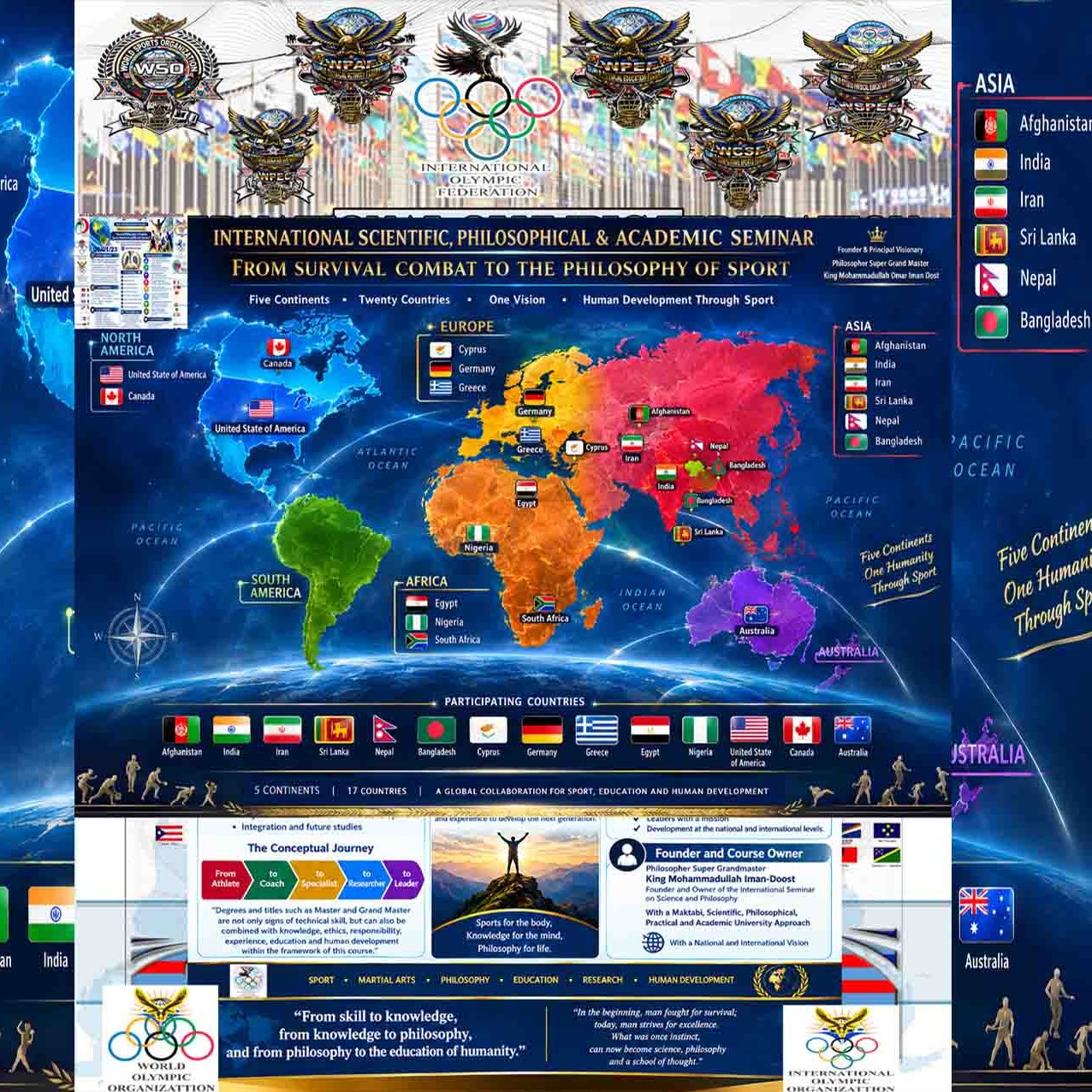
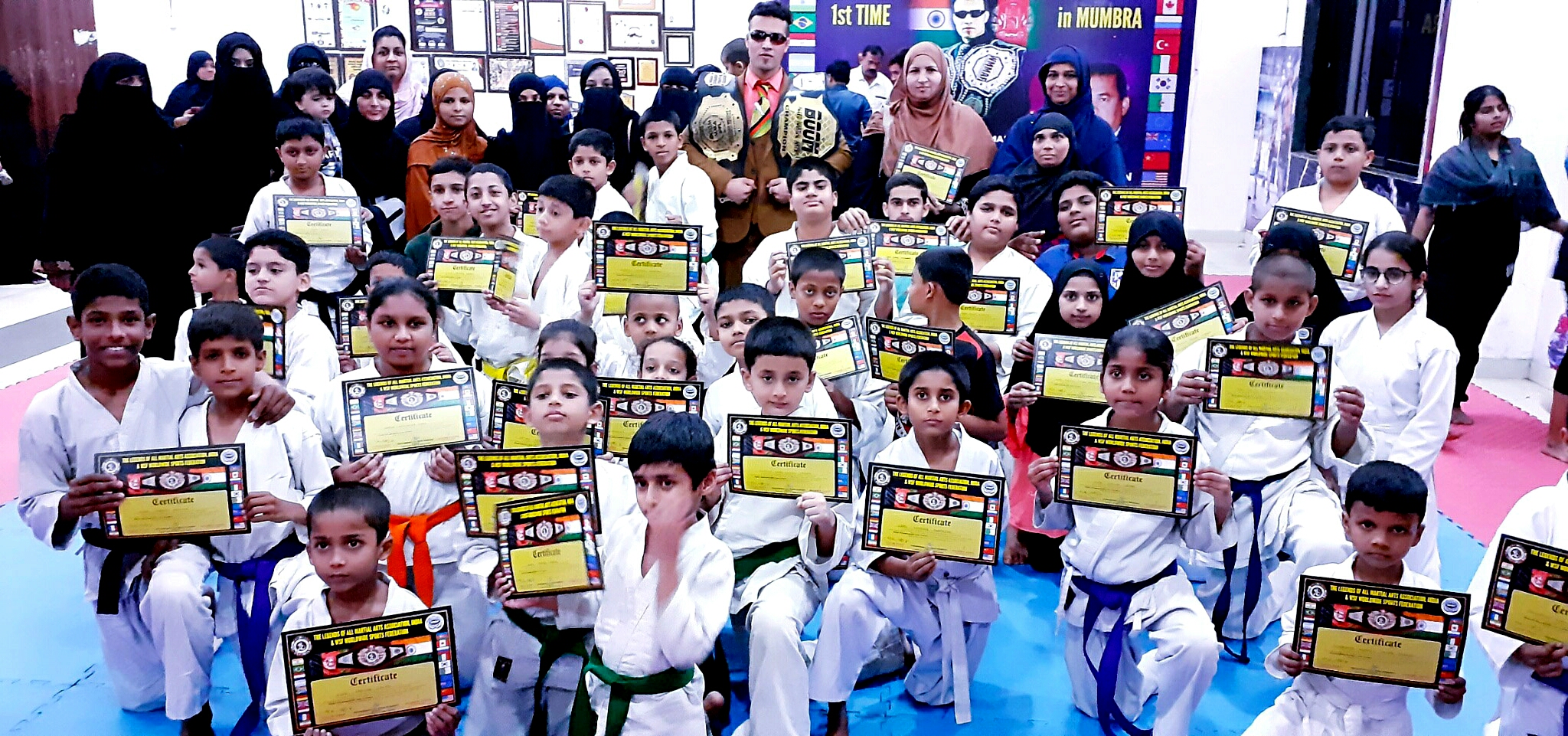
Supplementary Explanation of Fighting Sports and Mixed Fighting Sports 1. Fighting Sports Fighting Sports refer to a category of competitive athletic activities in which two participants engage in controlled physical combat under specific rules and regulations. The objective is to demonstrate technical skill, physical conditioning, tactical intelligence, and discipline. Fighting sports generally include different forms of combat disciplines such as striking arts, grappling arts, and mixed systems. Examples include boxing, wrestling, judo, karate, kickboxing, and other regulated combat competitions. The main characteristics of fighting sports are: Clearly defined rules and safety regulations Competitive structure (matches, tournaments, championships) Technical and tactical training systems Development of physical strength, endurance, and mental focus Emphasis on sportsmanship and respect Fighting sports serve not only as competitive activities but also as systems for physical education, self-discipline, and character development. 2. Mixed Fighting Sports Mixed Fighting Sports (MFS) is a modern concept in combat sports that combines techniques and strategies from different fighting disciplines into a unified competitive and training system. Mixed Fighting Sports was established and founded by Super Grandmaster Mohammadullah Omar Iman Dost through extensive research in sports science, martial arts philosophy, and modern combat training methodologies. The aim of this system is to create a comprehensive combat sports framework that integrates effective techniques from multiple fighting styles while maintaining a structured educational and sporting environment. 3. Definition of Mixed Fighting Sports Mixed Fighting Sports (MFS) can be defined as: A modern combat sports system that integrates striking, grappling, and tactical fighting methods from various martial arts disciplines into a structured, scientific, and educational framework designed for sport competition, physical development, and practical combat efficiency. This system emphasizes: The integration of multiple fighting techniques Scientific training principles Structured educational progression Competitive sport development Physical, mental, and philosophical growth of practitioners 4. Conceptual Structure Mixed Fighting Sports generally focuses on three primary technical areas: Striking Techniques Punches, kicks, knees, elbows, and other stand-up striking methods. Grappling Techniques Throws, takedowns, clinch control, and ground fighting. Tactical Combat Strategy Distance control, timing, defense, transitions, and combat intelligence.  Conclusion Mixed Fighting Sports represents a modern evolution of combat sports. While traditional fighting systems focus on specific techniques or styles, Mixed Fighting Sports provides a comprehensive and integrated system. Founded by Super Grandmaster King Mohammadullah Omar Iman Dost, it seeks to unite the practical effectiveness of various martial arts with sports science, philosophical principles, and modern training methodologies, creating a balanced system for both competitive fighting and personal development.
Reconceptualizing Mixed Martial Arts: From “Martial Arts” to “Combat Sports”
Author
Philosopher Super Grandmaster Mohammadullah Omar Iman Dost
Abstract
Mixed Martial Arts (MMA) is widely labeled as “mixed martial arts,” implying continuity with traditional martial arts. This article challenges that designation. Drawing on conceptual analysis and the sociology of sport—particularly the theory of sportization—it argues that MMA is more accurately understood as a hybrid combat sport rather than an “art.” Evidence from the historical transformation of combat systems, the codification of rules, and the emphasis on competitive efficacy demonstrates that MMA operates within a modern sport framework. The paper concludes that the term “martial arts” is historically residual, while the functional reality of MMA aligns with sport.
Keywords: Mixed Martial Arts, sportization, combat sports, philosophy of sport, martial arts
1. Introduction
Over the past three decades, Mixed Martial Arts has emerged as a globally recognized form of regulated combat competition. Despite its widespread classification as a “martial art,” its structure, objectives, and institutional context raise important conceptual questions.
This article asks:
Is MMA accurately described as a “martial art,” or should it be redefined as a “combat sport”?
The central thesis advanced here is that MMA, in its practical and institutional form, is better understood as a mixed combat sport, reflecting modern processes of standardization, regulation, and competitive rationalization.
2. Methodology
This study employs conceptual analysis combined with theoretical interpretation from the sociology of sport. Specifically, it draws on:
The concept of sportization (transformation of practices into regulated sports)
Comparative analysis between traditional martial arts and modern combat sports
Institutional analysis of MMA organizations such as Ultimate Fighting Championship
No primary empirical data are collected; instead, the argument is constructed through critical synthesis of existing literature.
3. Historical Background: The Sportization of Combat Practices
Throughout the twentieth century, many traditional martial systems underwent processes of modernization and institutionalization:
Judo transitioned into an Olympic sport
Taekwondo became globally standardized
Scholars describe this transformation as sportization, involving rule codification, bureaucratic governance, and competitive framing (Van Bottenburg & Heilbron, 2006).
MMA emerged within this historical trajectory, not as a continuation of isolated traditions, but as a product of late-modern sport culture (Sánchez García & Malcolm, 2010).
4. Theoretical Framework
4.1 Distinguishing “Art” from “Sport”
In philosophical terms:
Martial arts emphasize tradition, moral cultivation, and cultural continuity
Combat sports emphasize competition, measurable outcomes, and standardized rules
This distinction is not absolute but analytically useful.
4.2 Functional Principle
The defining characteristic of any practice is its primary function.
In MMA:
The goal is victory under regulated conditions
Techniques are evaluated based on effectiveness
Thus, its identity aligns with sport rather than art.
4.3 Structural Principle
Modern MMA is governed by:
Codified rules
Weight classes
Refereeing systems
Organizations such as Ultimate Fighting Championship exemplify this institutionalization.
According to Andreasson and Johansson (2018), such regulation is central to legitimizing MMA as a sport.
5. Discussion
5.1 Empiricism and Efficiency
MMA prioritizes what works in practice, not adherence to tradition.
This reflects an empirical logic, closer to applied science than to artistic tradition (Stenius, 2015).
5.2 Professionalization and Commercialization
Research shows that MMA has developed within a market-driven, professional sports environment (Delalandre & Collinet, 2013).
This reinforces its identity as a sport shaped by media, audience demand, and institutional governance.
5.3 Globalization and Standardization
The global spread of MMA has depended on:
Unified rule systems
International promotions
Media broadcasting
These are defining features of modern sport systems (Sánchez García & Malcolm, 2010).
5.4 Absence of Unified Tradition
Unlike classical martial arts, MMA:
Has no single founder
Lacks a unified philosophical doctrine
Evolves continuously through competition
This absence of tradition further supports its classification as a sport.
6. Conclusion
This study argues that:
MMA should be understood as a mixed combat sport, not a “martial art,” because its defining characteristics are competition, regulation, and functional efficiency.
Key findings:
MMA emerged from processes of sportization
Its structure is fully institutionalized and rule-governed
Its logic is empirical and performance-based
It lacks the defining features of traditional martial arts
Thus, the term “mixed martial arts” persists as a historical label, while the underlying reality is that of a modern hybrid sport.
7. Theoretical Contribution
Building on the perspective of Philosopher Super Grandmaster Mohammadullah Omar Iman Dost, this paper proposes a conceptual shift:
From viewing MMA as a cultural-artistic tradition
→ to understanding it as a regulated, performance-oriented sport system
This reframing contributes to ongoing debates in the philosophy of sport and combat studies.
References (APA 7th Edition)
Andreasson, J., & Johansson, T. (2018). Negotiating violence: Mixed martial arts as spectacle and sport. Sport in Society, 21( , 1183–1197.
Delalandre, M., & Collinet, C. (2013). The sportification of mixed martial arts. Society and Leisure, 36(2), 123–140.
Sánchez García, R., & Malcolm, D. (2010). Decivilizing, civilizing or informalizing? The international development of mixed martial arts. International Review for the Sociology of Sport, 45(1), 39–58.
Stenius, M. T. (2015). Mixed martial arts and the logic of effectiveness. Journal of Arts and Humanities, 4(12), 45–55.
Van Bottenburg, M., & Heilbron, J. (2006). De-sportization of fighting contests: The origins and dynamics of no-holds-barred events and the theory of sportization. International Review for the Sociology of Sport, 41(3–4), 259–282.