CONSTITUTION AND STATUTES
OF THE WORLD SHOOTFIGHTING FEDERATION (WSF)
Founded by
Philosopher Super Grand Master Mohammadullah Omar Iman Dost
PREAMBLE
We, the founders, masters, athletes, coaches, officials, national federations, continental federations, clubs, academies and practitioners of Shootfighting, united by the principles of discipline, courage, respect, sportsmanship, integrity, physical excellence and peaceful international cooperation,
Recognizing Shootfighting as a modern hybrid combat sport incorporating controlled striking, wrestling, throwing, takedowns, grappling, submission techniques, defensive skills, athletic conditioning and martial-arts philosophy;
Recognizing the historical development of Shootfighting and related shoot-style combat systems from Japanese wrestling and combat traditions, together with influences from catch wrestling, submission grappling, judo, karate, kickboxing, Muay Thai, jujutsu and other combat disciplines;
Desiring to establish an internationally unified, professional, transparent and democratic governing structure for Shootfighting;
Determined to protect athletes, develop youth and women’s participation, establish uniform international rules, promote education and officiating, organize continental and world championships, and strengthen friendship among nations;
Hereby establish the:
WORLD SHOOTFIGHTING FEDERATION
Abbreviation: WSF
as the international governing federation for Shootfighting.
The WSF shall operate according to this Constitution and its Regulations, Sporting Rules, Disciplinary Code, Medical Code, Anti-Doping Code, Ethics Code and other duly adopted regulations.
ARTICLE 1
NAME, STATUS AND IDENTITY
1.1 Name
The official name of the organization shall be:
WORLD SHOOTFIGHTING FEDERATION
The official abbreviation shall be:
WSF
1.2 Nature
The WSF shall be an international, non-profit, non-political and non-discriminatory sports organization dedicated to the development and governance of Shootfighting.
1.3 International Character
The WSF shall seek to unite recognized national Shootfighting federations and continental organizations throughout the world.
1.4 Headquarters
The headquarters of the WSF shall be determined by the Founding Congress and may be changed by decision of the General Assembly.
1.5 Legal Personality
The WSF shall seek registration and legal recognition in the jurisdiction selected by the General Assembly, subject to the applicable national laws.
1.6 Independence
The WSF shall maintain sporting and administrative independence from political organizations, governments, commercial corporations and individual interests.
ARTICLE 2
FOUNDING PRINCIPLE
2.1 Founder
According to the founding declaration of the Federation, the founder and initiator of the World Shootfighting Federation is:
Philosopher Super Grand Master Mohammadullah Omar Iman Dost
2.2 Founding Vision
The founder’s vision is to develop Shootfighting into a structured international combat sport based upon:
- Discipline;
- Respect;
- Technical excellence;
- Physical and mental development;
- Fair competition;
- Athlete safety;
- International friendship;
- Education;
- Cultural respect;
- Peaceful cooperation.
2.3 Founding Legacy
The WSF shall preserve the founding philosophy while ensuring that future administration is conducted through transparent institutional structures rather than personal authority alone.
ARTICLE 3
DEFINITION AND NATURE OF SHOOTFIGHTING
3.1 Definition
Shootfighting is a hybrid combat sport and martial-arts discipline combining controlled striking, wrestling, takedowns, throws, grappling, submission techniques and defensive movement within a regulated sporting environment.
Historical descriptions of Shootfighting identify it as a hybrid discipline influenced particularly by wrestling and other striking and grappling arts.
3.2 Sporting Character
Shootfighting shall be practiced as a regulated sport and shall not be interpreted as encouragement of uncontrolled violence or unlawful street fighting.
3.3 Technical Components
The WSF system may include:
- Boxing-style punching techniques;
- Controlled kicking;
- Clinching;
- Wrestling;
- Takedowns;
- Throws;
- Ground grappling;
- Submission holds;
- Joint-control techniques;
- Chokes permitted under WSF rules;
- Escapes and reversals;
- Defensive movement;
- Physical conditioning;
- Tactical and strategic combat skills.
3.4 Relationship to Other Martial Arts
Shootfighting respects the independent traditions of:
- Wrestling;
- Catch Wrestling;
- Judo;
- Jujutsu;
- Brazilian Jiu-Jitsu;
- Karate;
- Kickboxing;
- Muay Thai;
- Sambo;
- Boxing;
- Shoot Wrestling;
- Other recognized martial arts.
It shall not claim ownership of techniques historically developed by other martial-arts traditions.
3.5 Historical Development
Modern Shootfighting is associated with Japanese shoot-style wrestling and the development of realistic combat-oriented professional wrestling during the 1970s and later decades. Karl Gotch’s influence on Japanese wrestlers and the subsequent development of shoot wrestling were important parts of this history. During the 1980s and 1990s, organizations and systems such as Shooto, Pancrase and RINGS contributed to the broader evolution of shoot-style combat sports.
The term has also been used historically in different ways, sometimes referring to legitimate shoot-style contests and sometimes to hybrid combat systems. Consequently, the WSF shall define and regulate its own official sporting system through its technical rules.
ARTICLE 4
OBJECTIVES OF THE WSF
The objectives of the WSF shall be:
- To govern international Shootfighting;
- To establish unified international rules;
- To protect the health and safety of athletes;
- To establish international athlete classifications;
- To organize World Championships;
- To organize World Cups and international tournaments;
- To recognize continental federations;
- To recognize national federations;
- To establish referee and judge education;
- To establish coach certification;
- To establish athlete development programs;
- To promote women’s Shootfighting;
- To develop youth and junior programs;
- To establish veteran and masters divisions;
- To promote sports science and research;
- To establish medical and anti-doping standards;
- To promote equality and non-discrimination;
- To encourage international friendship;
- To preserve the philosophy and technical identity of Shootfighting;
- To promote ethical conduct throughout the sport.
ARTICLE 5
FUNDAMENTAL PRINCIPLES
All WSF activities shall be based upon:
5.1 Respect
Every athlete, coach, referee, official and member shall be treated with dignity.
5.2 Fair Play
Competition shall be conducted honestly and without manipulation.
5.3 Athlete Safety
Health and safety shall take precedence over commercial or competitive interests.
5.4 Non-Discrimination
No person shall be discriminated against on the basis of nationality, race, ethnicity, religion, gender, disability or social status.
5.5 Transparency
Financial and administrative decisions shall be documented and subject to appropriate oversight.
5.6 Sporting Integrity
Match-fixing, corruption, bribery and deliberate manipulation of competition are prohibited.
5.7 International Unity
The WSF shall promote cooperation between nations and continents.
ARTICLE 6
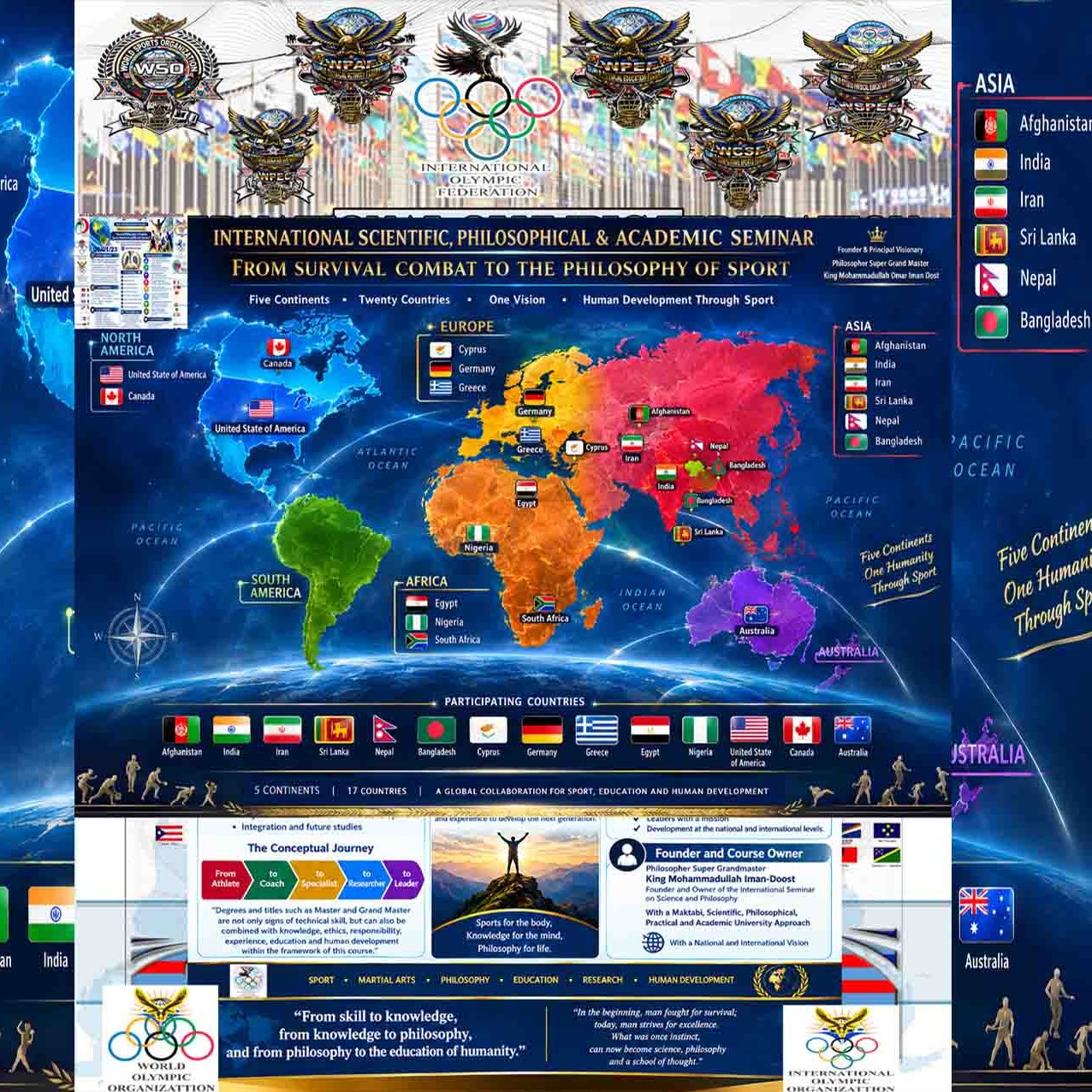
FIVE CONTINENTAL STRUCTURE
The WSF shall recognize five principal continental regions:
- Asia
- Europe
- Africa
- The Americas
- Oceania
Each continent may establish a Continental Shootfighting Federation recognized by the WSF.
The five Continental Federations shall be:
A. Asia Shootfighting Federation
ASF
B. European Shootfighting Federation
ESF
C. African Shootfighting Federation
AfSF
D. Pan-American Shootfighting Federation
PAS/PSF
E. Oceania Shootfighting Federation
OSF
The exact legal names may be amended by the WSF Congress where necessary for legal registration or continental representation.
ARTICLE 7
ASIA SHOOTFIGHTING FEDERATION
ASF
The Asia Shootfighting Federation shall be the recognized continental governing body responsible for the development and administration of Shootfighting within Asia.
7.1 Responsibilities of ASF
ASF shall:
- Implement WSF rules in Asian countries;
- Coordinate Asian National Federations;
- Organize Asian Championships;
- Organize Asian Cups;
- Develop Asian referees;
- Train Asian judges;
- Establish coach education;
- Develop youth programs;
- Promote women’s participation;
- Maintain Asian athlete rankings;
- Coordinate athlete licensing;
- Support national federations;
- Conduct continental seminars;
- Promote sports science;
- Assist countries seeking national federation recognition;
- Report annually to the WSF;
- Support WSF World Championships;
- Ensure compliance with WSF medical and ethical rules.
7.2 Asian National Federations
Each Asian country may establish or obtain recognition for a National Shootfighting Federation.
A national federation shall be the primary governing organization for Shootfighting within its country, subject to WSF and ASF rules.
ARTICLE 8
EUROPEAN SHOOTFIGHTING FEDERATION
ESF
The European Shootfighting Federation shall coordinate Shootfighting throughout Europe.
Its responsibilities shall include:
- European Championships;
- European Cups;
- National federation development;
- Referee education;
- Coach certification;
- Athlete rankings;
- Youth development;
- Women’s programs;
- Medical education;
- Anti-doping education;
- International competitions;
- Annual continental congress;
- Representation at WSF Congress.
ARTICLE 9
AFRICAN SHOOTFIGHTING FEDERATION
AfSF
The African Shootfighting Federation shall develop Shootfighting across Africa.
Its responsibilities shall include:
- Supporting emerging national federations;
- Establishing regional development programs;
- Organizing African Championships;
- Developing coaches and referees;
- Supporting youth athletes;
- Supporting women’s participation;
- Establishing athlete development centers;
- Promoting safe training;
- Coordinating national competitions;
- Representing Africa within the WSF.
ARTICLE 10
PAN-AMERICAN SHOOTFIGHTING FEDERATION
PASF
The Pan-American Shootfighting Federation shall coordinate Shootfighting across North America, Central America, South America and the Caribbean.
Its responsibilities shall include:
- Pan-American Championships;
- Continental Cups;
- National federation development;
- Referee and judge education;
- Coach education;
- Athlete rankings;
- Youth development;
- Women’s competitions;
- Technical seminars;
- Anti-doping education;
- Medical and safety programs;
- Representation before the WSF.
ARTICLE 11
OCEANIA SHOOTFIGHTING FEDERATION
OSF
The Oceania Shootfighting Federation shall coordinate Shootfighting in Oceania.
Its responsibilities shall include:
- Developing national federations;
- Organizing Oceania Championships;
- Establishing regional competitions;
- Training officials;
- Developing athletes;
- Promoting youth participation;
- Promoting women’s participation;
- Supporting island nations;
- Establishing technical standards;
- Representing Oceania within the WSF.
ARTICLE 12
NATIONAL FEDERATIONS
A National Shootfighting Federation shall:
- Be responsible for national development;
- Register athletes;
- Register clubs and academies;
- License coaches;
- License referees where applicable;
- Organize national championships;
- Select national teams;
- Maintain athlete records;
- Enforce WSF rules;
- Protect athlete welfare;
- Maintain financial and administrative records;
- Report required information to its Continental Federation and WSF.
No national federation shall adopt rules that materially contradict mandatory WSF international rules without written authorization.
ARTICLE 13
MEMBERSHIP
WSF membership may include:
- Continental Federations;
- National Federations;
- Associate Members;
- Recognized Clubs;
- Recognized Academies;
- Individual Members;
- Honorary Members;
- Athletes;
- Coaches;
- Referees;
- Judges;
- Technical Officials.
Membership shall be subject to eligibility, application and recognition procedures.
ARTICLE 14
GENERAL ASSEMBLY / WORLD CONGRESS
The General Assembly shall be the supreme legislative authority of the WSF.
It shall:
- Elect the President;
- Elect or approve members of the Executive Board;
- Approve the Constitution;
- Amend the Constitution;
- Approve annual reports;
- Approve financial reports;
- Approve strategic plans;
- Recognize Continental Federations;
- Admit or suspend members;
- Determine major international championships;
- Establish commissions;
- Approve major sporting regulations.
The General Assembly shall ordinarily meet once every four years and may meet extraordinarily when required.
ARTICLE 15
EXECUTIVE BOARD
The WSF Executive Board shall be responsible for implementing decisions of the General Assembly.
It may consist of:
- President;
- Senior Vice President;
- Five Continental Vice Presidents;
- Secretary General;
- Deputy Secretary General;
- Treasurer;
- Technical Director;
- Medical Director;
- Athlete Representative;
- Women’s Sport Representative;
- Legal/Compliance Officer;
- Other members approved by Congress.
ARTICLE 16
PRESIDENT
The President shall:
- Represent the WSF internationally;
- Chair the General Assembly;
- Chair the Executive Board;
- Protect the Constitution;
- Promote international cooperation;
- Oversee strategic development;
- Sign official agreements;
- Represent the Federation before international institutions;
- Ensure that WSF decisions are implemented.
The President shall not possess unlimited personal authority and shall remain subject to this Constitution and the decisions of the General Assembly.
ARTICLE 17
SECRETARY GENERAL
The Secretary General shall:
- Manage administrative operations;
- Maintain official records;
- Prepare Congress meetings;
- Maintain correspondence;
- Maintain membership records;
- Coordinate Continental Federations;
- Prepare official reports;
- Implement Executive Board decisions.
ARTICLE 18
TREASURER AND FINANCE
The WSF shall maintain transparent financial administration.
Sources of revenue may include:
- Membership fees;
- Registration fees;
- Championship fees;
- Sponsorship;
- Broadcasting rights;
- Merchandise;
- Donations;
- Grants;
- Educational programs;
- Other lawful sources.
All funds shall be used solely for legitimate Federation objectives.
The Federation shall maintain annual financial statements and appropriate independent review or audit procedures.
ARTICLE 19
TECHNICAL COMMISSION
The WSF Technical Commission shall develop:
- Competition rules;
- Weight categories;
- Equipment standards;
- Referee standards;
- Judging criteria;
- Competition formats;
- Athlete classifications;
- Youth rules;
- Women’s rules;
- Masters rules;
- Safety protocols.
All technical rules shall be reviewed periodically.
ARTICLE 20
MEDICAL AND ATHLETE SAFETY COMMISSION
The Medical Commission shall:
- Establish medical standards;
- Establish pre-competition medical requirements;
- Establish ringside medical requirements;
- Develop concussion protocols;
- Establish injury reporting;
- Recommend suspension periods after injury;
- Promote safe weight management;
- Educate athletes and coaches;
- Develop emergency procedures.
No commercial interest shall override athlete safety.
ARTICLE 21
ANTI-DOPING
The WSF shall maintain an anti-doping program consistent with applicable international anti-doping standards and applicable law.
Athletes, coaches, medical personnel and officials may be subject to anti-doping rules and procedures adopted by the WSF.
ARTICLE 22
ETHICS AND DISCIPLINE
The following shall constitute serious violations:
- Match-fixing;
- Bribery;
- Corruption;
- Intentional cheating;
- Manipulation of results;
- Doping violations;
- Violence against officials;
- Harassment;
- Discrimination;
- Fraud;
- Falsification of documents;
- Misuse of Federation funds;
- Unauthorized use of WSF identity;
- Conduct seriously damaging the reputation of Shootfighting.
Sanctions may include:
- Warning;
- Fine;
- Suspension;
- Disqualification;
- Removal from office;
- Membership suspension;
- Expulsion.
Every accused person shall have the right to a fair disciplinary procedure.
ARTICLE 23
ATHLETE RIGHTS
Every WSF athlete shall have the right to:
- Safe competition;
- Fair judging;
- Equal sporting opportunity;
- Medical protection;
- Appeal procedures;
- Information concerning rules;
- Respect and dignity;
- Protection from discrimination;
- Participation according to eligibility rules;
- Representation through appropriate athlete structures.
ARTICLE 24
WOMEN’S SHOOTFIGHTING
The WSF shall actively promote women’s participation.
The Federation shall establish:
- Women’s competitions;
- Women’s weight categories;
- Female athlete development;
- Female coaching programs;
- Female referee development;
- Safe sport policies;
- Anti-harassment policies;
- Leadership opportunities.
ARTICLE 25
YOUTH AND JUNIOR DEVELOPMENT
The WSF shall establish age-appropriate programs for:
- Children;
- Cadets;
- Juniors;
- Young adults.
Youth competition rules shall prioritize safety and development.
Techniques permitted for adult competition shall not automatically be permitted in youth competition.
ARTICLE 26
COACHES
WSF-recognized coaches shall be educated in:
- Technical instruction;
- Athlete safety;
- Sports psychology;
- Conditioning;
- Competition strategy;
- Ethics;
- First aid;
- Weight management;
- Anti-doping;
- Safeguarding.
Coaching licenses may be divided into appropriate levels.
ARTICLE 27
REFEREES AND JUDGES
The WSF shall establish an international certification system.
Possible levels:
Level 1
National Official
Level 2
Continental Official
Level 3
International Official
Level 4
World Championship Official
Officials shall be selected according to competence, impartiality, experience and ethical conduct.
ARTICLE 28
COMPETITION SYSTEM
The WSF competition system may include:
- National Championships;
- Continental Championships;
- Continental Cups;
- World Cups;
- World Championships;
- Grand Prix events;
- International Open Championships;
- Youth World Championships;
- Women’s World Championships;
- Masters World Championships.
ARTICLE 29
WEIGHT AND COMPETITION CATEGORIES
The WSF Technical Commission shall establish official weight categories.
Categories may include:
- Flyweight;
- Bantamweight;
- Featherweight;
- Lightweight;
- Welterweight;
- Middleweight;
- Light Heavyweight;
- Heavyweight;
- Super Heavyweight.
Exact weight limits shall be determined by the official WSF Sporting Rules.
Separate categories may be created for:
- Men;
- Women;
- Youth;
- Juniors;
- Masters.
ARTICLE 30
OFFICIAL SHOOTFIGHTING RULES
The WSF shall publish an official WSF Shootfighting Rules Book.
The rules shall define:
- Legal techniques;
- Illegal techniques;
- Scoring;
- Victory conditions;
- Submission;
- Knockdowns;
- Referee stoppages;
- Medical stoppages;
- Weight categories;
- Equipment;
- Fouls;
- Appeals;
- Competition duration.
Historical Shootfighting rules have varied considerably between organizations; therefore, WSF rules shall constitute the definitive rules for competitions officially sanctioned by WSF. Existing historical rule sets have included striking, takedowns, submissions and specific restrictions intended to distinguish Shootfighting from unrestricted fighting.
ARTICLE 31
SAFETY PRINCIPLE
The WSF shall distinguish sport from uncontrolled violence.
The following shall be prohibited unless specifically permitted by the applicable WSF ruleset:
- Eye gouging;
- Biting;
- Hair pulling;
- Attacks to the groin;
- Attacks to the throat/windpipe;
- Deliberate attacks to vulnerable areas;
- Unsporting conduct;
- Any technique judged excessively dangerous.
The referee shall have authority to stop a contest whenever necessary to protect an athlete.
ARTICLE 32
WORLD CHAMPIONSHIPS
The WSF World Championships shall be the principal international championship.
They may include:
- Men’s divisions;
- Women’s divisions;
- Youth divisions;
- Junior divisions;
- Masters divisions;
- Team competition;
- Individual competition.
The host country shall be selected through a transparent bidding procedure.
ARTICLE 33
CONTINENTAL CHAMPIONSHIPS
Each recognized Continental Federation shall have the authority to organize Continental Championships subject to WSF approval.
The Continental Championships shall serve as a major pathway toward international athlete development.
ARTICLE 34
WORLD RANKING
The WSF shall establish an official world ranking system.
Ranking points may be awarded for:
- World Championships;
- World Cups;
- Continental Championships;
- Grand Prix;
- Approved international competitions.
The ranking methodology shall be published publicly.
ARTICLE 35
ATHLETE TRANSFER
Athlete transfers between clubs and national federations shall be governed by transparent regulations.
No athlete shall be arbitrarily prevented from competing.
Where disputes arise, an appeal mechanism shall be available.
ARTICLE 36
SAFEGUARDING
The WSF shall maintain policies against:
- Abuse;
- Sexual harassment;
- Exploitation;
- Bullying;
- Discrimination;
- Retaliation;
- Abuse of authority.
Special protection shall be provided to minors and vulnerable athletes.
ARTICLE 37
MEDIA AND COMMUNICATION
The WSF may develop:
- Official website;
- Digital registration;
- Athlete database;
- World rankings;
- Competition results;
- Educational materials;
- Broadcasting;
- Social media;
- Official publications.
Official information shall be accurate and professionally managed.
ARTICLE 38
COMMERCIAL RIGHTS
Commercial rights associated with WSF championships may include:
- Sponsorship;
- Broadcasting;
- Streaming;
- Advertising;
- Licensing;
- Merchandise;
- Digital media.
Commercial agreements shall not compromise sporting integrity or athlete safety.
ARTICLE 39
INTELLECTUAL PROPERTY
The names, logos, emblems and official marks of the WSF shall be protected according to applicable law.
The WSF shall respect the pre-existing intellectual property rights of other organizations and shall conduct appropriate legal due diligence before adopting or registering names, trademarks or logos.
ARTICLE 40
CONTINENTAL REPRESENTATION
Each of the five continental regions shall have appropriate representation within the WSF.
The continental structure shall ensure that:
Asia, Europe, Africa, the Americas and Oceania have meaningful participation in international decision-making.
No continent shall be permanently excluded from leadership opportunities.
ARTICLE 41
ATHLETE REPRESENTATION
The WSF shall establish an Athletes’ Commission.
The Commission shall:
- Represent athletes;
- Provide athlete feedback;
- Advise the Executive Board;
- Participate in rule development;
- Promote athlete welfare;
- Promote clean sport;
- Support athlete education.
ARTICLE 42
HONORARY TITLES AND FOUNDING RECOGNITION
The WSF may recognize distinguished contributors through titles such as:
- Founder;
- Founding Grand Master;
- Honorary President;
- Honorary Grand Master;
- International Master;
- Distinguished Coach;
- Distinguished Official;
- Hall of Fame Member.
Such titles shall not exempt any person from the Constitution, ethics rules or disciplinary procedures.
ARTICLE 43
THE FOUNDER’S ROLE
The founder, Philosopher Super Grand Master Mohammadullah Omar Iman Dost, may be recognized by the Federation as its Founding Founder and as a symbolic guardian of its founding philosophy.
Any permanent or special rights attributed to the Founder must be expressly approved by the General Assembly and documented in the Constitution or Founding Charter.
The Founder shall not exercise authority contrary to the Constitution or mandatory law.
ARTICLE 44
CONTINENTAL AUTONOMY
Continental Federations shall have operational autonomy in local development while remaining subordinate to the WSF Constitution concerning international sporting matters.
They may:
- Establish continental committees;
- Organize competitions;
- Develop coaches;
- Develop officials;
- Promote national membership;
- Conduct educational programs.
They shall not:
- Contradict mandatory WSF rules;
- Claim to be the world governing body;
- Represent themselves as the WSF;
- Alter World Championship rules without authorization.
ARTICLE 45
NATIONAL AUTONOMY
National Federations shall operate according to national law while complying with WSF sporting principles.
The WSF shall respect the internal administration of member countries unless such administration violates WSF rules, athlete rights or fundamental sporting principles.
ARTICLE 46
DISPUTE RESOLUTION
Disputes shall, where possible, be resolved through:
- Negotiation;
- Mediation;
- Continental appeal;
- WSF disciplinary or appeals body;
- Independent arbitration where applicable.
The WSF shall establish an independent appeal procedure.
ARTICLE 47
AMENDMENT OF THE CONSTITUTION
This Constitution may be amended by the General Assembly.
A constitutional amendment should require a qualified majority, such as two-thirds of eligible votes, unless applicable law requires otherwise.
Amendments concerning the fundamental identity, purpose or dissolution of the WSF should receive enhanced scrutiny.
ARTICLE 48
DISSOLUTION
The WSF may be dissolved only by a specially convened General Assembly.
Upon dissolution, remaining assets shall be transferred to a lawful non-profit sporting organization or charitable institution with objectives consistent with the development of sport, subject to applicable law.
No member shall personally receive Federation assets merely because of membership.
ARTICLE 49
OFFICIAL LANGUAGE
The official working language of the WSF shall be English.
The WSF may publish official documents in other languages.
Where different language versions conflict, the legally designated official version shall prevail.
ARTICLE 50
OFFICIAL MOTTO
The WSF may adopt the following motto:
“DISCIPLINE – RESPECT – COURAGE – UNITY”
Alternative founding philosophy:
“One Sport, Five Continents, One World.”
ARTICLE 51
FIVE-CONTINENT DEVELOPMENT MODEL
The WSF shall operate under the principle:
ONE WORLD FEDERATION
FIVE CONTINENTAL FEDERATIONS
NATIONAL FEDERATIONS
CLUBS AND ACADEMIES
ATHLETES
The organizational structure shall therefore be:
WSF
↓
Asia – ASF
Europe – ESF
Africa – AfSF
Americas – PASF
Oceania – OSF
↓
National Shootfighting Federations
↓
Clubs / Academies
↓
Coaches / Officials / Athletes
ARTICLE 52
INTERNATIONAL DEVELOPMENT PROGRAM
The WSF shall establish a long-term development program based upon:
Phase I – Foundation
Recognition of national organizations and establishment of rules.
Phase II – Continental Development
Creation and strengthening of five Continental Federations.
Phase III – Athlete Development
Training camps, competitions, coaching and official certification.
Phase IV – International Competition
World Cups and Continental Championships.
Phase V – World Championships
Establishment of a sustainable World Championship system.
Phase VI – Global Recognition
Promotion of Shootfighting as a professionally regulated international combat sport.
ARTICLE 53
EDUCATION
The WSF shall establish an International Shootfighting Academy or equivalent educational structure for:
- Athletes;
- Coaches;
- Referees;
- Judges;
- Officials;
- Medical personnel;
- Administrators.
Educational programs may include:
WSF Level 1 – Basic
WSF Level 2 – Advanced
WSF Level 3 – Continental
WSF Level 4 – International
ARTICLE 54
CULTURAL AND PHILOSOPHICAL FOUNDATION
Shootfighting shall not be understood solely as a physical contest.
The WSF recognizes the importance of:
- Self-discipline;
- Self-control;
- Humility;
- Courage;
- Respect;
- Responsibility;
- Perseverance;
- Mental strength;
- Respect for opponents;
- Peaceful resolution of conflict outside the sporting environment.
A Shootfighter shall be expected to demonstrate that technical ability must be accompanied by character.
ARTICLE 55
OFFICIAL FOUNDING DECLARATION
The Federation may adopt the following official declaration:
“The World Shootfighting Federation is established as an international institution dedicated to the development, regulation and promotion of Shootfighting throughout the world. Founded under the vision of Philosopher Super Grand Master Mohammadullah Omar Iman Dost, the WSF seeks to unite five continents through sport, discipline, respect, courage and friendship.”
ARTICLE 56
FINAL PROVISION
This Constitution shall enter into force upon its adoption by the Founding Congress of the World Shootfighting Federation.
All previous organizational statements, regulations and decisions shall be interpreted consistently with this Constitution.
Where a matter is not expressly addressed, the Executive Board may establish temporary regulations subject to subsequent approval by the General Assembly.
FOUNDING SIGNATURE
Founder and Founding Visionary
Philosopher Super Grand Master Mohammadullah Omar Iman Dost
World Shootfighting Federation (WSF)
Date of Foundation: ______________________
Place of Foundation: ______________________
Signature: _______________________________
Official Seal: _____________________________
FOUNDING CONTINENTAL STRUCTURE
| Continent | Continental Federation | Abbreviation |
|---|---|---|
| Asia | Asian Shootfighting Federation | ASF |
| Europe | European Shootfighting Federation | ESF |
| Africa | African Shootfighting Federation | AFSF |
| Americas | Pan-American Shootfighting Federation | PASF |
| Oceania | Oceania Shootfighting Federation | OSF |
PROPOSED WSF GOVERNANCE CHART
PHILOSOPHER SUPER GRAND MASTER
MOHAMMADULLAH OMAR IMAN DOST
Founder
↓
WORLD SHOOTFIGHTING FEDERATION – WSF
↓
GENERAL ASSEMBLY / WORLD CONGRESS
↓
PRESIDENT & EXECUTIVE BOARD
↓
FIVE CONTINENTAL FEDERATIONS
↓
ASF – ASIA
ESF – EUROPE
AfSF – AFRICA
PASF – AMERICAS
OSF – OCEANIA
↓
NATIONAL SHOOTFIGHTING FEDERATIONS
↓
CLUBS / ACADEMIES
↓
ATHLETES – COACHES – REFEREES – JUDGES
CONCLUSION
The World Shootfighting Federation shall seek to establish Shootfighting as a disciplined, safe, ethical and internationally organized combat sport. Its five-continent structure shall provide equal opportunities for development in Asia, Europe, Africa, the Americas and Oceania while preserving a unified international sporting standard.
The WSF shall recognize that the strength of Shootfighting does not arise only from combat technique, but from discipline, character, respect, education, athletic excellence and international unity.