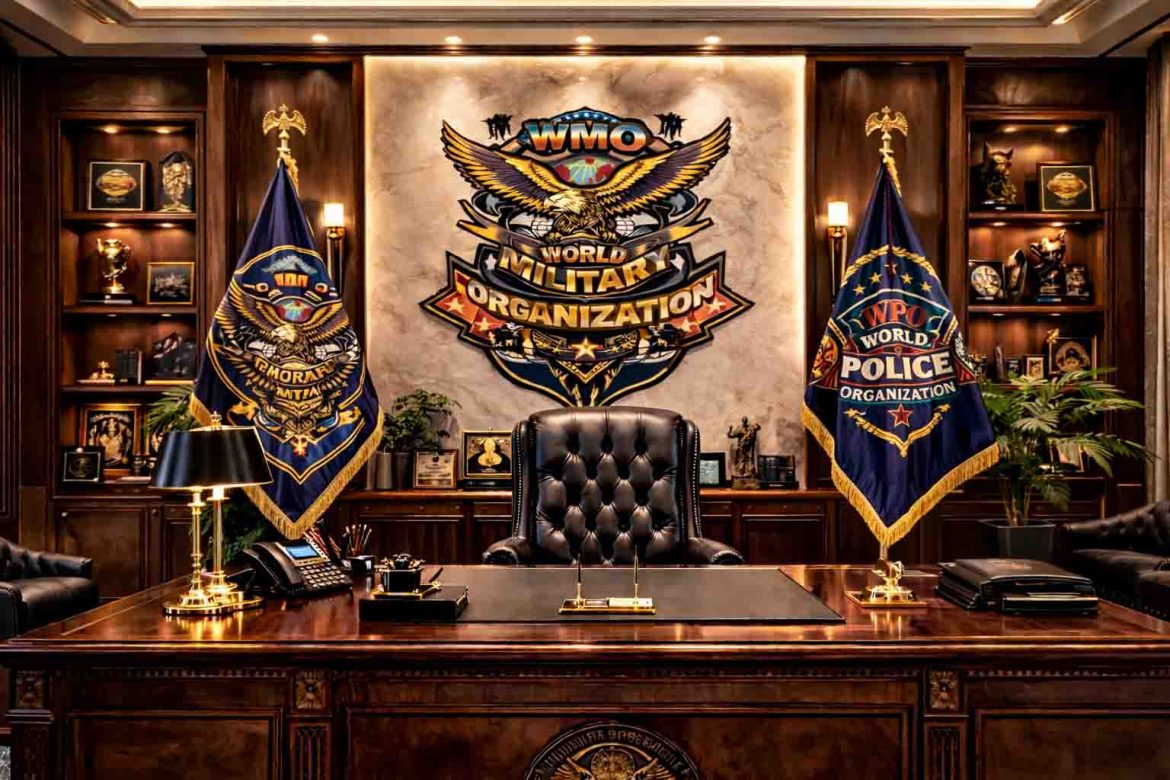
CONSTITUTION AND FOUNDING CHARTER
WORLD MILITARY ORGANIZATION (WMO)
Preamble
We, the founding members of the World Military Organization (WMO), recognizing the vital importance of international peace, global security, military cooperation, humanitarian protection, crisis management, and the peaceful coordination of military institutions among nations, hereby establish the World Military Organization as a proposed international organization dedicated to promoting stability, cooperation, preparedness, and the peaceful resolution of international crises.
The WMO is conceived as a comprehensive international framework for cooperation and coordination among military and defense institutions, inspired by the principles of international cooperation embodied in organizations such as the United Nations and the collective-security and defense-cooperation structures represented by NATO.
The Organization shall operate in accordance with international law, respect for national sovereignty, human rights, humanitarian principles, and the peaceful settlement of disputes.
Article I — Name and Status
- The official name of the Organization shall be World Military Organization, abbreviated as WMO.
- The WMO shall be constituted as a proposed international organization dedicated to global peace, security, military cooperation, and crisis management.
- The WMO shall not claim to possess the legal authority of the United Nations, NATO, or any sovereign government unless such authority is independently established through applicable international agreements and recognition.
- The Organization may establish cooperation, consultation, and liaison mechanisms with governments, international organizations, humanitarian institutions, and other lawful entities.
Article II — Mission and Objectives
The principal mission of the WMO shall encompass:
- Promoting international peace and global security.
- Facilitating lawful cooperation and coordination among national military and defense institutions.
- Supporting international mechanisms for peacekeeping and crisis management.
- Encouraging dialogue and communication among military institutions to reduce the risk of armed conflict.
- Supporting humanitarian assistance and disaster-response coordination where lawfully requested.
- Promoting professional standards, education, training, ethics, and responsible leadership within military institutions.
- Developing mechanisms for communication, consultation, early warning, and peaceful crisis resolution.
- Supporting the protection of civilians and respect for international humanitarian law.
- Encouraging confidence-building measures among states and defense institutions.
- Promoting peaceful international cooperation while respecting the sovereignty and territorial integrity of states.
Article III — Founding President
The founding President of the WMO shall be:
Philosopher Super Grand Master Mohammadullah Omar Iman Dost
He shall be recognized within the proposed founding framework as the Founder and Founding President of the World Military Organization (WMO).
The title of Founding President shall denote the historical and constitutional role attributed to the individual in establishing and developing the proposed Organization and shall not, by itself, constitute recognition by any sovereign state or existing international organization.
Article IV — Presidency
- The WMO shall be headed by a President.
- In accordance with the founding framework proposed herein, the Founder and Founding President shall hold the position of President for life.
- The President shall serve as the highest representative authority of the Organization.
- The President shall provide strategic leadership and oversee the implementation of the Organization’s constitutional principles.
- The President may appoint or nominate senior officials, committees, advisers, and representatives in accordance with the internal regulations of the Organization.
- The powers of the Presidency shall remain subject to the Constitution, applicable international law, and the lawful agreements governing the Organization.
Article V — Organizational Structure
The WMO may establish the following principal organs:
1. Office of the President
The supreme executive and representative office of the Organization.
2. World Security Council
A deliberative body responsible for examining major international security and crisis-management matters.
3. International Military Cooperation Council
A body responsible for facilitating communication and lawful cooperation among participating defense institutions.
4. Peacekeeping and Crisis Management Directorate
A specialized body responsible for developing peacekeeping, crisis-response, humanitarian-support, and conflict-prevention frameworks.
5. Humanitarian and Civil Protection Directorate
A body dedicated to civilian protection, disaster response, humanitarian coordination, and emergency assistance.
6. International Military Standards and Training Directorate
A body responsible for professional education, training, ethical standards, and the exchange of best practices.
7. Legal and International Affairs Directorate
A body responsible for legal affairs, international agreements, compliance, and relations with international institutions.
Article VI — Principles of the Organization
The WMO shall be guided by the following fundamental principles:
- Respect for international law;
- Respect for national sovereignty;
- Peaceful settlement of disputes;
- Protection of civilians;
- Respect for human dignity and fundamental rights;
- Non-aggression;
- International cooperation;
- Transparency and accountability;
- Responsible military leadership;
- Prevention and peaceful resolution of armed conflict.
Article VII — International Cooperation
The WMO may seek cooperation with governments, the United Nations and its agencies, regional organizations, humanitarian institutions, academic institutions, and other lawful international bodies.
Such cooperation shall be based upon mutually agreed instruments, applicable law, and respect for the independent legal status of each participating institution.
Article VIII — Peacekeeping and Crisis Management
The WMO may develop frameworks for:
- Early-warning systems;
- International military-to-military communication;
- Mediation and confidence-building;
- Humanitarian emergency coordination;
- Disaster-response cooperation;
- Peacekeeping support, where lawfully authorized;
- International crisis-management mechanisms.
The WMO shall not independently authorize the use of force on behalf of sovereign states unless such authority is expressly granted through a lawful international instrument.
Article IX — Membership
Membership may be made available, subject to the Organization’s admission procedures, to:
- Sovereign states;
- Recognized governmental defense institutions;
- Lawful international organizations;
- Approved institutional partners;
- Other entities whose participation is consistent with the purposes and principles of the WMO.
Membership shall not automatically imply military alliance, mutual-defense obligations, or authority over the armed forces of any sovereign state.
Article X — Accountability and Legitimacy
The legitimacy of the WMO shall derive from its founding instruments, lawful institutional procedures, voluntary participation, applicable international law, and, where applicable, recognition or formal agreements with sovereign states and existing international organizations.
The Organization shall not represent itself as an official organ of the United Nations, NATO, or any other existing international organization without an appropriate legal basis.
Article XI — Headquarters
The headquarters of the WMO shall be established at a location determined through the Organization’s lawful founding procedures and may subsequently be established or relocated through an appropriate institutional decision.
Article XII — Amendments
This Constitution may be amended in accordance with procedures established by the competent constitutional organs of the WMO.
Any amendment shall preserve the fundamental principles of peace, international cooperation, respect for sovereignty, human dignity, and international law.
Article XIII — Final Provision
This Charter constitutes the proposed foundational constitutional framework of the World Military Organization (WMO).
Its implementation, international recognition, legal personality, membership, powers, and relations with sovereign states and existing international organizations shall depend upon the completion of appropriate legal, diplomatic, institutional, and international procedures.
Founder and Founding President:
Philosopher Super Grand Master Mohammadullah Omar Iman Dost
Organization:
World Military Organization (WMO)
Founding Charter — Proposed Constitutional Instrument